

Knee Pain Brooklyn, NY
- SoftWave-Led Knee Care
- Arthritic & Injured Knees
- No Injections or Surgery
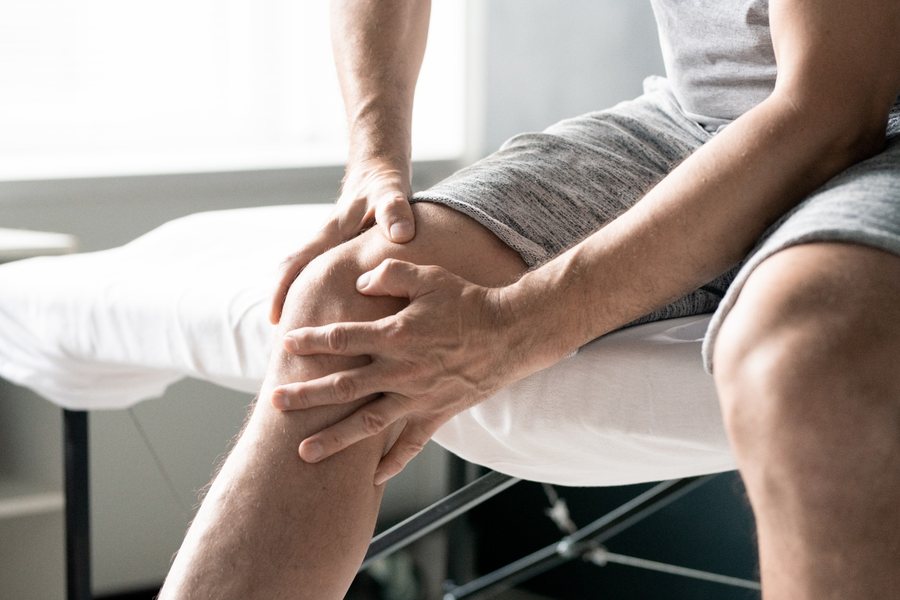
Here at Nuro Chiropractic in Brooklyn, I’ve been seeing a lot of knee complaints. I am Dr. Brian Donovan, and I get the first clue whenever the patient describes their knee pain, which is what equipment they will need to get better. Do I need to undergo SoftWave or knee decompression?
I consider those questions wrong. What you must ask is the cause of your knee pain. Tools are available here, and before doing anything, identifying the cause is the first step.
What Patients Describe
Knee osteoarthritis commonly manifests as a deep ache and stiffness that worsens when walking, standing, or climbing stairs. Other symptoms look nothing like that:
- Sharp pain along the inside or outside
- Pain with twisting or squatting
- Clicking or catching in the joint
- Swelling that shows up after activity
- A knee that feels less stable than before
- Pain around the kneecap when running
Having knee pain is just a part of a bigger picture. When the examination is done, the results say that the knee pain is related to the hip, the ankle, or even the lower back.
How I Evaluate Knee Pain in Brooklyn
- 1 Taking into account the history. Knowing when the pain started, if an injury was sustained, areas experiencing pain, and whether there is swelling, locking, catching, buckling, or instability.
- 2 We are trying to restore your normal function; that’s why knowing what activities you can no longer do comfortably.
- 3 Examine range of motion, strength, joint-line and soft-tissue tenderness, ligament stability, meniscal signs, and patellar mechanics.
- 4 Watch for signs that the hip, ankle, and neurological system are involved. Observe how you move. Walking, squatting, stepping, and whatever reproduces the symptoms.
Assessment of degenerative changes such as knee osteoarthritis can be easily seen with a digital X-ray in our office. For significant meniscus, ligament, cartilage, or tendon injury cases, an MRI is strongly advised, or an orthopedic evaluation too.
Treatment Options I Consider
- For the knee to handle load better, for mild mechanical knee pain: mobility, stretching, manual therapy, and progressive strengthening are done.
- SoftWave therapy when the diagnosis supports it for cases such as certain chronic tendon and soft-tissue conditions
- A knee decompression system that applies controlled traction to the joint, like Knee on Trac, plus mobility and strengthening are used for osteoarthritis or significant joint compression and stiffness.
- Options like Class IV laser, PEMF, and cryotherapy are used as last resorts when there is enough clinical reason.
A person with mild patellofemoral pain has a different issue than an old man having advanced osteoarthritis. The treatment plan is totally not the same; that is why it is expected that every knee patient will not be able to use all the machines in the office.
When a Knee Needs Orthopedic Evaluation
If you are unable to bear weight, got major deformity, progressive swelling, a locked knee, and severe instability after a significant trauma, you’ll need a medical evaluation right away rather than sticking with conservative treatment.
I can also do co-management if necessary. Discussing corticosteroid injections, viscosupplementation, PRP, or other options with a specialist if you have moderate to severe osteoarthritis while on conservative treatment can yield promising results. On the other hand, knee replacement is probably the best option if there is severe pain that is already affecting the quality of life.
“My job is not to keep somebody out of surgery at all costs. My job is to help them receive the right level of care at the right time.”
Dr. Brian Donovan, D.C.Knee Pain FAQs
What is Knee on Trac and who is it for?
Patients with osteoarthritis or severe joint compression and stiffness use a knee decompression system that applies controlled traction to the joint, used alongside mobility and strengthening rather than on its own. It is not the solution for every knee issue; the findings determine if it can be used rather than just the complaint itself.
Will arthritis improve with chiropractic care? Can chiropractic care help arthritis in the knee?
Even if it cannot regrow cartilage or reverse advanced arthritis, it can ease symptoms, mobility, strength, and walking tolerance. Being physically active as long as possible is a realistic goal we are trying to achieve.
My knee clicks and catches. Is that serious?
No, as long as it is painless. If catching comes with pain, swelling, or a feeling that the knee is falling, it must be examined. Since those symptoms indicate a meniscal or ligament problem, early intervention is suggested because a knee that’s truly locked will not straighten by itself.
Why does my knee hurt if the problem is my hip?
The hip and the ankle cannot absorb load well, so the knee, which sits between them, does that job. Examining the whole area is done when there is no full explanation of where the pain is coming from after checking the knee. We must know how load arrives at the knee; checking the weak or stiff structures above and below could answer that question.
Should I stop running because of knee pain?
Usually just temporary. While we try your strength and mechanics to get better, you need to adjust your volume, surface, and progression, and that approach is enough for active patients. If you stop completely, there will come a time that if you start running again, pain will just return.
Start With the Diagnosis, Not the Machine
We can decide if you’ll undergo rehabilitation, SoftWave, knee decompression, another conservative treatment, an orthopedic consultation, or some combination, once we know the cause of your knee pain. We only have to choose the right one with the plenty of tools available in our office.
Nuro Chiropractic, 9408 4th Ave, Brooklyn, NY 11209. Serving Bay Ridge, Staten Island, Bensonhurst, Park Slope, Prospect Park, Borough Park, Manhattan, Dyker Heights, Williamsburg, and the greater Brooklyn area.