

Scoliosis Brooklyn, NY
- Chiropractic BioPhysics
- X-Ray Based Evaluation
- Youth & Adult Curves
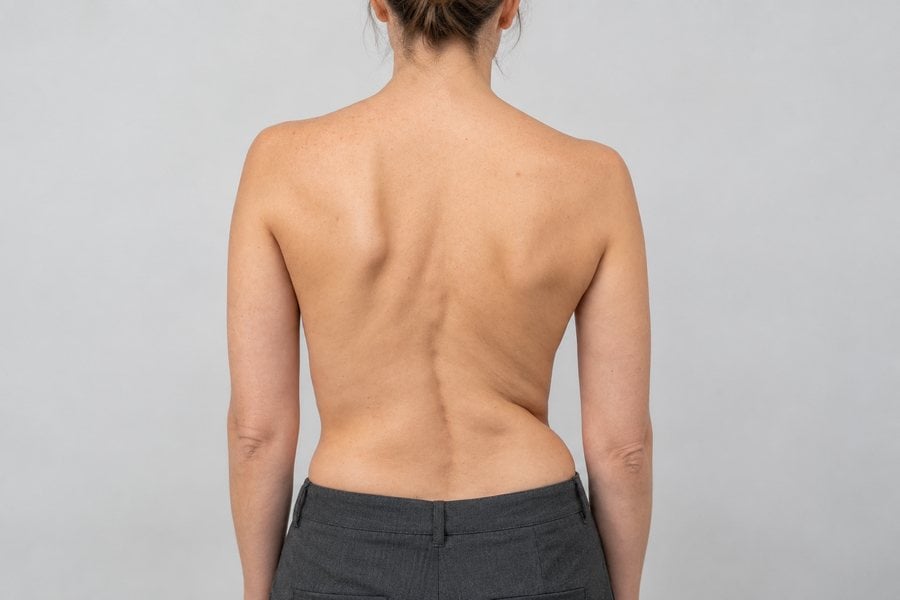
Scoliosis is a condition that makes the spine curve side-to-side. This is different from the body’s natural front-to-back curve, and usually it’s mild and doesn’t cause symptoms. However, when left alone, it can result in back pain, and this is why setting expectations early is important. My name is Dr. Brian Donovan, and I help patients with scoliosis have a better life in my Nuro Chiropractic clinic in Brooklyn, NY.
Most people are diagnosed when they are younger, when one shoulder appears higher than the other. However, plenty of adults are visiting not just because of the curve but because they’re experiencing stiffness or discomfort when doing their daily activities like exercising. We will conduct an X-ray examination for a different diagnosis, and we may find a curvature related to scoliosis that the patient may not be aware of.
Having Scoliosis Doesn’t Mean It’s the Cause of Your Pain
This may surprise a lot of people, but scoliosis can be a three-dimensional spinal deformity that doesn’t affect a lot of people’s activities. A person with a mild spinal curve can still experience significant muscle pain caused by something other than scoliosis.
“I want to evaluate the person, not simply the results of their X-ray.”
Dr. Brian Donovan, D.C.When someone shows me an X-ray with a spinal curve, I want to determine whether that curve is actually causing their symptoms. Sometimes scoliosis contributes to the pain, but it may not be the only cause. In other cases, the curve may even have nothing to do with what they’re experiencing.
How Do I Evaluate Scoliosis in Our Brooklyn Clinic?
- 1 I will assess one’s posture, their movement patterns, and other factors to see if they have scoliosis.
- 2 Checks are done for rib prominence, and we will conduct an Adam’s forward-bend test that’s appropriate for the patient’s age.
- 3 Perform a neurological examination, specifically if there’s pain in the limbs, or if one is experiencing numbness or tingling, weakness, or balance problems.
- 4 The staff will take an X-ray to measure the curve using the Cobb angle instead of us relying on vision alone.
The Cobb angle is the standard measurement used to quantify the severity of spinal curvatures. It identifies the end of the vertebrae on a standing spinal X-ray, and straight lines are drawn along the top edge of the image so the angle can be calculated.
Why Age Changes Everything?
Fourteen-year-olds who are still growing with a progressing curve will generally have a clinical situation from a forty-five-year-old who wants to help managing back pain. They may have the same scoliosis diagnosis, but one may have different ways of dealing with the problem entirely.
- Remaining growth affects the risk of progression.
- Changes in the curve over time matter more than its size alone.
- The Cobb angle helps determine the appropriate next steps.
- Skeletal maturity influences which treatment options are available.
- Scoliosis curves in adults are generally more stable.
- For adults, treatment focuses on relieving pain and improving function.
For younger children, the priority is to monitor the growth of the curve, and this is done by a pediatric specialist. Depending on the case and the progression, the doctors may recommend specific exercises, and some kids may wear braces or undergo surgical consultation if needed.
What Care Looks Like for Adults
- Adults can undergo chiropractic adjustments, soft-tissue therapy, mobility and stretching, and progressive exercise aimed at pain, stiffness, strength, and endurance.
- Scoliosis-specific rehabilitation when appropriate, including working alongside a physical therapist trained in methods such as the Schroth approach.
- Additional treatments may be needed, such as in the case of degenerative changes or disc-related symptoms alongside the curve. These are addressed differently with an entirely customized treatment plan.
I can’t promise you a straight spine, especially if you’re an adult with scoliosis, because chiropractic adjustments are not magical solutions for these cases. Instead, I focus on relieving pain and making sure that your muscles will have better endurance. This way, you can move without feeling any stiffness, and this treatment is designed to make your life better.
When Does Scoliosis Need a Specialist?
Patients who have a significant curve that’s progressing should be monitored by a scoliosis specialist. They shouldn’t try chiropractic adjustments first, but instead, they should try specialized programs with posture training to manage their condition.
A worsening deformity in adults may need special evaluation too, especially if the neurological symptoms are becoming progressive. If one has walking problems, they may not respond to conservative treatments, and they may require other alternatives.
If I find signs of nerve involvement or symptoms that are unusual for scoliosis, I investigate further or refer the patient to a specialist rather than assuming the curvature is causing everything.
Scoliosis FAQs
Can a chiropractor straighten a scoliosis curve?
Not in the same sense most people think. Adjustments don’t correct a structural curve, and the best doctors don’t make promises that repeated sessions can fix a child’s scoliosis. Instead, they often do conservative care that can help with one’s function and pain.
At what curve size does scoliosis become a concern?
There’s not a single number that works for everyone because the findings of the Cobb angle have to be compared with skeletal maturity to see if the curve is changing. A mild curve in children who are still growing will need closer monitoring than a more stable curve in adults.
Does scoliosis always cause pain?
No. Many people with curves can live comfortably while not thinking too much of their condition. So, when an adult with scoliosis experiences back pain, the pain may be coming from something else that would have shown up regardless. This is worth checking out instead of just assuming that the ache will go away on its own.
Should my teenager see a chiropractor for scoliosis?
Yes. A chiropractor can help manage musculoskeletal symptoms. Growing adolescents who have a significant, progressing curve may also need a scoliosis specialist tracking the changes. I would rather your child get a second opinion than have my office be the only place you turn to for care.
Can I still lift weights or run with scoliosis?
For most adults with a stable curve, yes, and staying active is usually part of the plan to promote a better life. However, the technique may need attention, and sitting still to protect a curve tends to leave people weaker.
Schedule Your Chiropractic Consultation
At Nuro Chiropractic, Dr. Brian Donovan offers customized treatment plans for back pain, neck pain, and injuries. Your care begins with a thorough assessment, followed by a clear treatment plan tailored to your needs. Call our Brooklyn office today to set up your consultation.