

Spinal Decompression Brooklyn, NY
- Non-Surgical & Drug-Free
- About 20 Minutes per Session
- Stay Fully Clothed
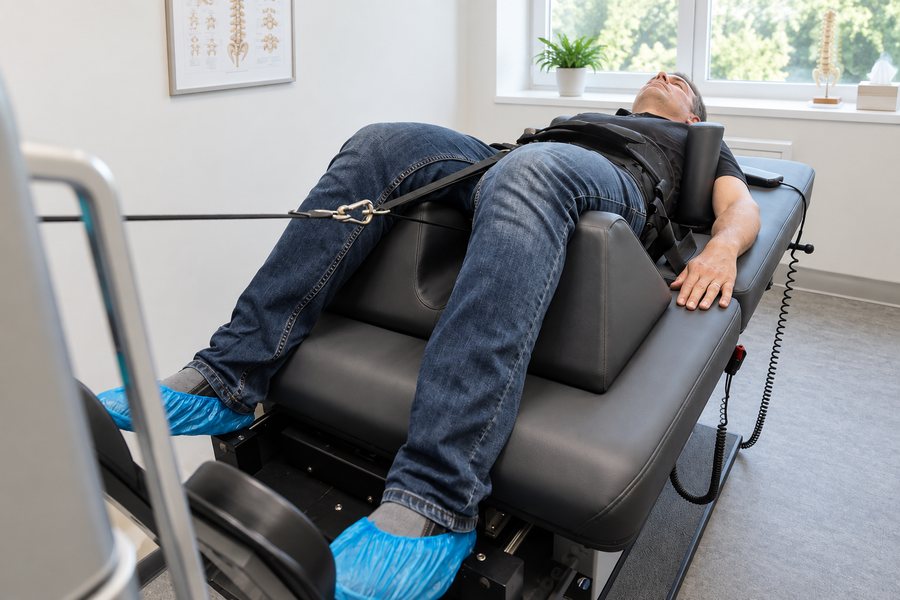
Spinal decompression is a non-invasive treatment that uses controlled mechanical forces to reduce loading on the spine. I am Dr. Brian Donovan, and at Nuro Chiropractic in Brooklyn it may help manage symptoms in appropriately selected patients with certain disc-related and degenerative conditions.
Those two words, appropriately selected, are doing most of the work in that sentence. We do not recommend decompression simply because an MRI report contains the phrase disc bulge.
Two Systems, Chosen by Diagnosis
We have two different traction and decompression systems here: Back on Trac and the DRX9000. Having both means we select the approach based on your diagnosis, symptoms, imaging findings, tolerance, and stage of care rather than putting every patient through the same protocol.
- Back on Trac provides controlled lumbar traction and mobilization, with the patient comfortably positioned throughout.
- The DRX9000 delivers a more targeted, computer-controlled non-surgical decompression protocol, with the patient positioned and secured on the table.
- Force and treatment parameters are individualized and modified based on your tolerance and response.
I do not choose based on which machine sounds more impressive. I choose based on which approach makes the most clinical sense for the patient in front of me.
How I Decide at Our Brooklyn Office
- 1 Perform the examination and review MRI findings when they are clinically relevant.
- 2 Determine whether those imaging findings actually correlate with your symptoms and neurological examination, which is the step most often skipped.
- 3 Weigh severity, neurological findings, and how long the problem has been present. A recent disc problem without neurological loss has a very different prognosis from a severe condition present for years.
- 4 Choose the system and parameters, then set realistic expectations before we start rather than afterwards.
Conditions Decompression May Suit
- Lumbar or cervical disc herniations and bulges
- Disc-related neck or lower-back pain
- Some cervical or lumbar radiculopathy
- Degenerative disc disease
- Certain foraminal narrowing
- Chronic spinal pain where unloading may help
It is not appropriate for every back or neck problem. Suspected fracture or spinal instability, certain severe osteoporosis, spinal infection or tumour, some postoperative conditions or spinal hardware, and other significant structural abnormalities may rule a patient out.
Progressive neurological weakness, symptoms concerning for spinal cord involvement, or bowel and bladder dysfunction with saddle numbness require additional or urgent medical evaluation rather than starting decompression.
What a Session Feels Like
It is non-invasive, and most patients find the treatment comfortable and relaxing. Most describe a stretching or pulling sensation rather than pain. If symptoms significantly worsen during treatment, we reassess rather than assuming more force is better.
Afterward, some patients notice less pressure, easier movement, or reduced symptoms fairly quickly. Others improve gradually across a course of treatment, and some have temporary soreness. I do not expect one session to permanently change a chronic disc condition.
How We Measure Whether It Is WorkingPain is one measure and not the only one. Can you sit or stand longer? Is leg or arm pain decreasing? Are symptoms that travelled into the limb beginning to centralize? Are numbness, tingling, or weakness changing? Those findings decide whether we continue, modify, or reconsider. If you are not responding as expected, the answer is not automatically more decompression.
What I Will Not Promise You
“We treat the patient, not the MRI. The imaging helps us understand the anatomy. Your symptoms, examination, neurological findings, and response to care determine what we actually do.”
Dr. Brian Donovan, D.C.I do not promise that decompression will fix every herniated disc or permanently put a disc back into place. It applies controlled mechanical unloading and may help appropriately selected patients manage disc-related symptoms. Nobody can guarantee a herniation will physically disappear or that a follow-up MRI will read as normal.
Spinal Decompression FAQs
Does spinal decompression hurt?
It generally should not. Most patients describe a stretching or pulling sensation and find the treatment comfortable. If your symptoms significantly worsen during a session, that is a signal to reassess rather than a sign we need more force.
Can decompression put my herniated disc back in?
I do not promise that. Decompression applies controlled mechanical unloading to the spine and may help appropriately selected patients manage disc-related symptoms. What I cannot guarantee is that a herniation will physically disappear or that your imaging will change.
How many sessions will I need?
There is no number that applies to everyone. It depends on the diagnosis, severity, MRI findings, how long the condition has been present, neurological involvement, and how you respond. Chronic or more significant conditions usually need a longer course than recent uncomplicated ones.
Do I need an MRI first?
Not every patient does. When we are dealing with significant radiating symptoms, neurological findings, or a suspected disc-related condition, MRI is extremely helpful for working out exactly what we are treating and whether decompression is appropriate at all.
What is the difference between Back on Trac and the DRX9000?
Both use controlled mechanical forces to unload the spine, but they deliver treatment differently. Back on Trac provides lumbar traction and mobilization. The DRX9000 provides a more targeted, computer-controlled decompression protocol. The choice comes from your clinical picture, not from which name sounds better.
Find Out Whether Decompression Fits Your Case
Before recommending it we look at your symptoms, neurological findings, MRI results, severity, and how long the problem has been there. The goal is realistic expectations from the beginning. Our new patient offer covers the consultation, examination, X-rays if needed, and treatment across two visits.
Nuro Chiropractic, 9408 4th Ave, Brooklyn, NY 11209. Serving Bay Ridge, Staten Island, Bensonhurst, Park Slope, Prospect Park, Borough Park, Manhattan, Dyker Heights, Williamsburg, and the greater Brooklyn area.